



3D animation model of the secondary comb dragon
It is a dinosaur that lived during the Late Cretaceous period and belongs to the ornithischian order, hadrosauridae family. Known for its unique headband, which is shaped like a long trumpet that extends from the top of the head to the back. Medium in size, typically around 9 to 10 meters in length, and weighing up to 2.5 tons. The teeth and jaw structure have adapted to a plant-based lifestyle, especially chewing hard plant stems and leaves. The function of the crown has always been a hot topic for paleontologists, with various theories proposed, including its use for vocal communication, regulating body temperature, and olfaction. Fossils are mainly found in North America, especially in some areas of Canada and the United States.
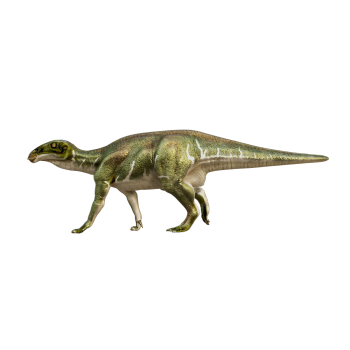
Iguanodon (with 3D animated model)
It is a type of dinosaur that lived in the Jurassic period, belonging to the bird hipped dinosaur order. Its name comes from Greek, meaning "ostrich lizard", mainly because they have long legs and running ability similar to ostriches. Large in size, generally up to 10 meters in length and 3 meters in height. The head is relatively small with a beak shaped mouth, suitable for chewing plants. The tail of the avian dragon is long and strong, which can be used to maintain balance or as a defensive tool. It is a social animal that feeds on plants and mainly lives in forests and swamps. The forelimbs are relatively short, with five fingers, but the thumb is particularly developed, forming a sickle like structure for defense or digging.

Kaijiaolong (with action 3D model)
It is a type of dinosaur that lived in the late Cretaceous period and is known for its unique head features, namely one or more pairs of large bony horns at the back of the skull. These horns are usually spear shaped and very spectacular. The ceratopsian dinosaurs belong to the bird hipped order and are a large group within the dinosaur family. They have a large body size, usually with strong limbs and thick skin, as well as a wide jaw and sharp teeth, suitable for chewing hard plants. Fossils of ceratopsian dinosaurs have been found in North America and Asia, and are important materials for studying dinosaur evolution and paleoecological environments.

Fossil skull of Protoceratops
Protoceratops, a ceratopsian dinosaur, lived in the late Cretaceous period (approximately 100-65 million years ago). It is a short legged quadruped animal with a body length of 2 meters and a weight of nearly 400 kilograms. The teeth are long and sharp. There are bony folds in the neck and large jaw muscles. May rely on palm leaves as a staple food. A quadrupedal dinosaur with a large head shield behind its head and no horns. Living in groups. They gave birth to small dinosaurs in their own nests. The heads of Protoceratops are of medium size, so they are relatively intelligent. It has a very similar appearance to the famous Triceratops, but is smaller in size and does not have long horns on its head.

Fossil of the upper half skull of the swollen dragon
The swollen headed dragon is a member of the thick headed dragon family in the order Ornithischia of the class Sauropods. The swollen headed dragon, also known as the thick headed dragon, has a thick bone plate on its head, which can reach a thickness of over 20 centimeters, and is raised high like a tumor. The body length is 4-6 meters and the weight is 0.5-4 tons. The area around the head and nose tip are also covered with small bone tumors, and some have large and sharp spines behind the head. Living in the late Cretaceous period, mainly distributed in North America, inhabiting plains, deserts, and other environments. Sexually inclined to live in groups, males fight in the form of "heads", with the winner being the leader of the entire group and occupying the female dinosaur. A herbivorous dinosaur that feeds on fruits, leaves, and other food.

Fossil of the skull of the Pterosaurus rex
The Pterosaur is a member of the Hadrosauridae family in the order Ornithischia, also known as the Pterosaur. The most obvious feature is the crown extending from the head, which is rod-shaped and longer than other crowned dinosaurs. There is a thin tube in the crown of the head that makes a sound when air passes by, and the secondary comb dragon uses it for "conversation". The forelimbs of the Pterodactylus can support its body, swim, and wade through water. Living in the late Cretaceous period, this organism was discovered in North America and lived along inland waterways. Eating plants, the habitat is home to many evergreen trees, ferns, and a small number of flowering plants. Collective living, with a keen sense of hearing and smell, will use a headband to sound an alarm signal when danger is detected.

Skull fossil of swollen dragon
The swollen headed dragon is a member of the thick headed dragon family in the order Ornithischia of the class Sauropods. The swollen headed dragon, also known as the thick headed dragon, has a thick bone plate on its head, which can reach a thickness of over 20 centimeters, and is raised high like a tumor. The body length is 4-6 meters and the weight is 0.5-4 tons. The area around the head and nose tip are also covered with small bone tumors, and some have large and sharp spines behind the head. Living in the late Cretaceous period, mainly distributed in North America, inhabiting plains, deserts, and other environments. Sexually inclined to live in groups, males fight in the form of "heads", with the winner being the leader of the entire group and occupying the female dinosaur. A herbivorous dinosaur that feeds on fruits, leaves, and other food.

Edmonton Dragon Head Bone Fossil
Edmontosaurus, also known as Edmontosaurus or Edmontosaurus, is named after the fossil discovery site in Edmonton, Alberta, Canada. Edmontosaurus is a huge dinosaur. They have a triangular shape on the side of their head, without a crest. The front and back of their head are wider, while the middle is narrower. Their mouth and nose resemble a duck's beak. Like other hadrosaurs, Edmontosaurus had a flat and wide front end of its head, a duck like snout, a lack of a crest, and a long and narrow tail. The forelimbs are shorter than the hind limbs, but the forelimbs are still of sufficient length and suitable for walking.

Fossil skull of a loving mother dragon
Maiasaura, due to its habit of living in groups and building nests in groups, dinosaur experts have been able to discover many fossils of adult and juvenile Maiasaura and their eggs from its nests, which has given people an understanding of Maiasaura's living habits, the process of nurturing and growing its children, and other aspects. The face of the loving mother dragon looks like the face of a duck. It doesn't have teeth in its beak, but there are teeth on both sides of its mouth. The Little Mother Dragon is 30 centimeters long. The front legs of the loving mother dragon are shorter than the back legs. They have a long tail. The loving mother dragon walks on four legs and runs on two legs, and they run very fast.

Fossil skull of fan crowned swan dragon
The Fanguan Swan Dragon is a member of the subfamily Lycosaurinae in the duck billed dinosaur family. Fossils were discovered in the Chagayan Formation near Kundur, Amur Oblast, Russian Far East, dating back to the middle or late Maastrichtian stage of the Late Cretaceous period. Like other hadrosaurids, the fancrown swan dragon is a herbivorous dinosaur that can walk on two or four legs, has a complex skull, can perform chewing like grinding actions, and has hundreds of constantly growing and replacing teeth. The tall, wide, hollow crown decoration of the fancrown swan dragon, which includes a nasal tube inside, may be used as a visual recognition object or auditory speaker.

Popular Models
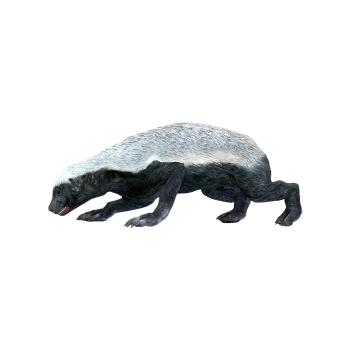
Honey Badger (3D animated model)
192 View
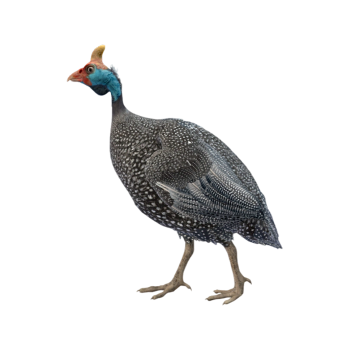
Guinea fowl (3D animated model)
163 View
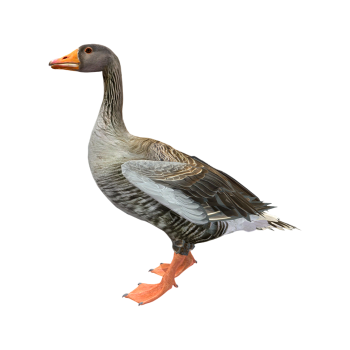
Wild Goose (3D animated model)
185 View
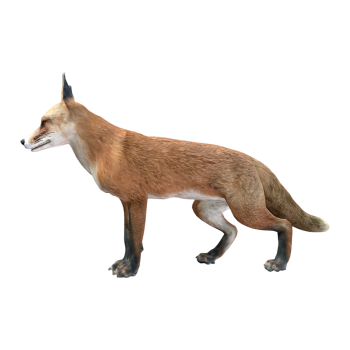
Red Fox (3D animated model)
153 View
Random Model

Temple Bel
928 View

19th century British kerosene lamp
868 View

Shouchang Bridge, Deqing County
718 View
Chandrayaan-3 lunar rover
1402 View
Broken Off-Road Motorcycle Boots
564 View

Emergency escape lighting
977 View
Seagull with 3D model animation
933 View

Old style metal kettle
919 View